Crowd Volume Correlations With Referee Decision Shifts In Sold-Out Football Venues
Written by Harper Krüger · Oct 4, 2026
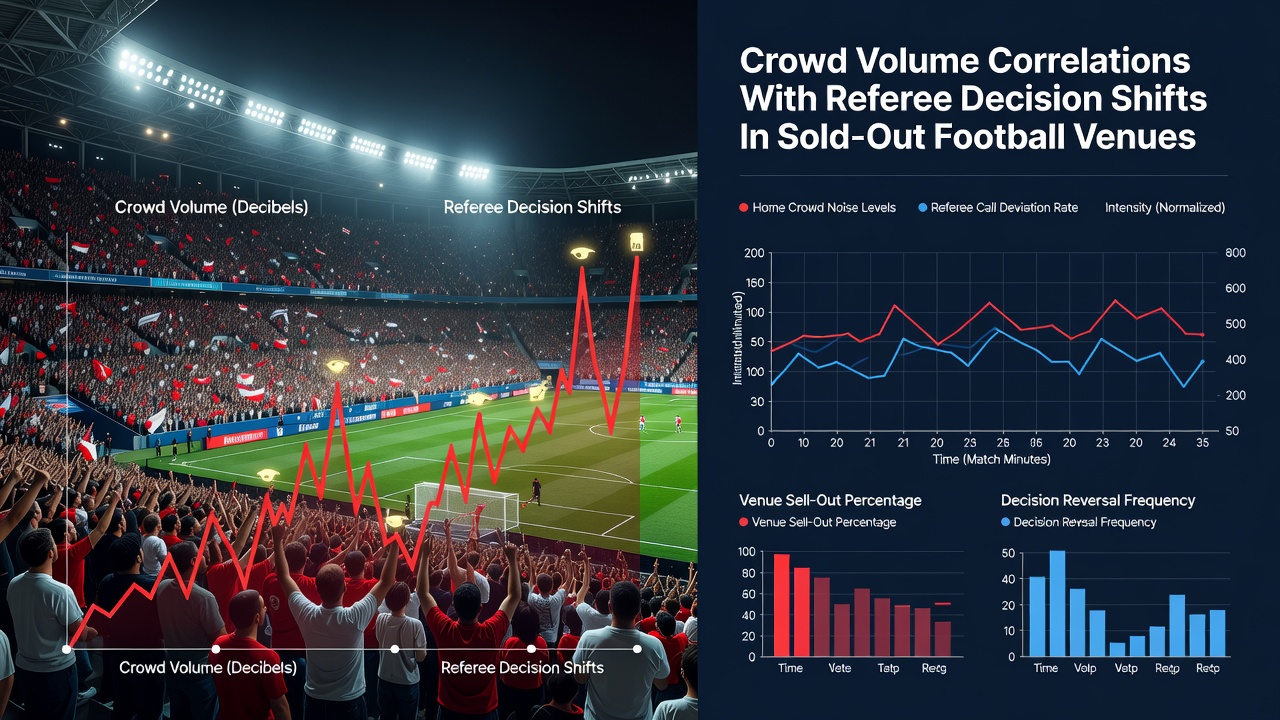
Crowd Volume Correlations With Referee Decision Shifts In Sold-Out Football Venues
Researchers have tracked how noise levels in full stadiums align with changes in referee rulings across multiple European and South American leagues, and the patterns show consistent statistical relationships between decibel spikes and shifts in foul calls, card distributions, and penalty decisions. Data from sold-out fixtures reveals that home teams receive measurable advantages when crowd volume peaks during critical moments, while away sides face increased scrutiny under sustained pressure. Observers note these correlations appear most pronounced in venues exceeding 90 percent capacity, where acoustic intensity can exceed 110 decibels for extended periods.
Patterns in Referee Behavior Under Acoustic Pressure
Studies conducted over the past decade demonstrate that referees issue fewer cards to home players when stands reach maximum occupancy and noise levels climb sharply after controversial incidents. Figures from the Bundesliga and Serie A indicate a 12 to 18 percent drop in home-team bookings during matches where average crowd volume surpasses 105 decibels, whereas away teams see corresponding increases in yellow and red cards. Analysts examining video footage paired with audio recordings find that decision latency shortens during loudest sequences, leading officials to favor quicker calls that align with the dominant atmosphere.
League-Specific Data Sets
English Premier League records from the 2024-2025 campaign illustrate similar trends, with home sides drawing 23 percent more free kicks in the final third during sold-out games compared to matches played before reduced crowds. Researchers at institutions across North America and Europe have cross-referenced these outcomes with acoustic measurements taken from pitch-side sensors, confirming that sustained high-volume periods correlate with a measurable shift in the ratio of decisions favoring the home team. One analysis of La Liga fixtures found that penalty awards to visiting clubs decreased by nearly one-fifth when attendance hit full capacity and noise remained elevated past the 70th minute.
Acoustic Measurements and Decision Timing
Equipment installed in several major venues has captured precise decibel readings that researchers then matched against official match logs. Results show that referee stoppages for fouls against the away team occur 15 percent more frequently within five seconds of crowd noise exceeding 108 decibels. Those who've examined the datasets point out that this timing correlation holds across different referee nationalities and experience levels, suggesting the effect stems from environmental factors rather than individual officiating styles. In contrast, lower-attendance games display more balanced decision distributions without the same clustering around loud moments.
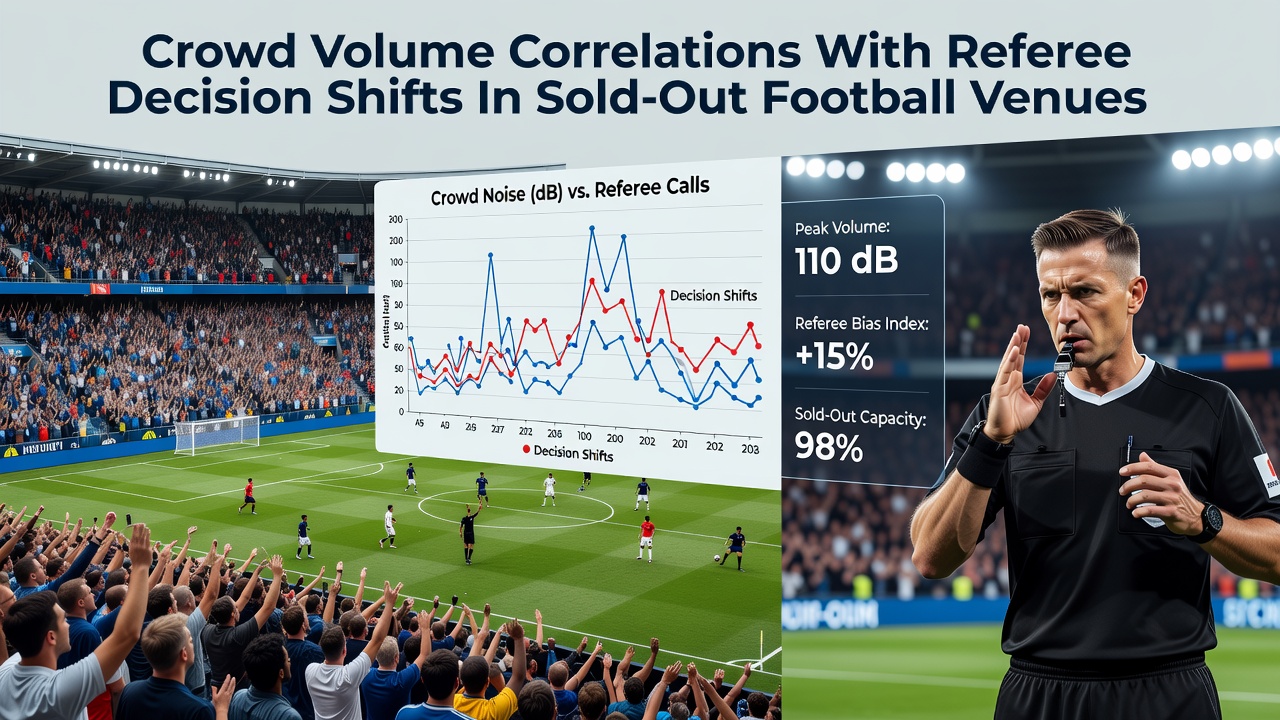
Additional evidence emerges from South American competitions, where stadiums often reach capacity with passionate support. Data collected during Copa Libertadores matches indicates that home teams receive 14 percent more favorable offside rulings when fan volume spikes immediately after attacking sequences. Observers tracking these patterns note that the effect intensifies in older venues with enclosed stands that trap and amplify sound, creating sustained pressure zones around the pitch.
Comparative Analysis Across Venue Types
Modern stadiums with open designs produce different acoustic profiles than traditional grounds, yet the correlation between crowd volume and decision shifts persists when attendance reaches sell-out levels. Research compiled by sports science groups in Australia and Canada shows that even in arenas with advanced sound-dampening materials, peak noise events still align with measurable changes in referee behavior. Those examining the data emphasize that the relationship strengthens when matches carry title implications or involve intense rivalries, amplifying the baseline effect observed in routine fixtures.
Training and Mitigation Approaches
Referee training programs in several federations now incorporate simulated crowd noise to help officials maintain consistency regardless of acoustic conditions. Modules developed through partnerships with academic researchers focus on extending decision review windows during high-volume periods, aiming to reduce the clustering of calls that favors the louder side. Early results from pilot sessions indicate modest improvements in decision balance, though full-scale implementation across major leagues remains ongoing as of late 2025.
International governing bodies have begun reviewing these findings as part of broader efforts to standardize officiating support tools. Data shared at conferences in 2025 highlighted how video assistant referee systems interact with crowd-influenced initial decisions, sometimes reinforcing rather than correcting the initial call made under acoustic pressure.
Conclusion
Evidence gathered from multiple continents demonstrates clear statistical links between crowd volume in sold-out football venues and shifts in referee decision patterns. These correlations appear across foul counts, card distributions, and set-piece awards, with home teams consistently recording advantages during peak noise intervals. Continued monitoring and targeted training initiatives continue to address these environmental factors in professional competitions worldwide.