Mountain Air Effects on Game Totals in Elevated Stadiums Creating Niche Wagering Opportunities
Written by Ulrich Baumann · Aug 19, 2026
Mountain Air Effects on Game Totals in Elevated Stadiums Creating Niche Wagering Opportunities
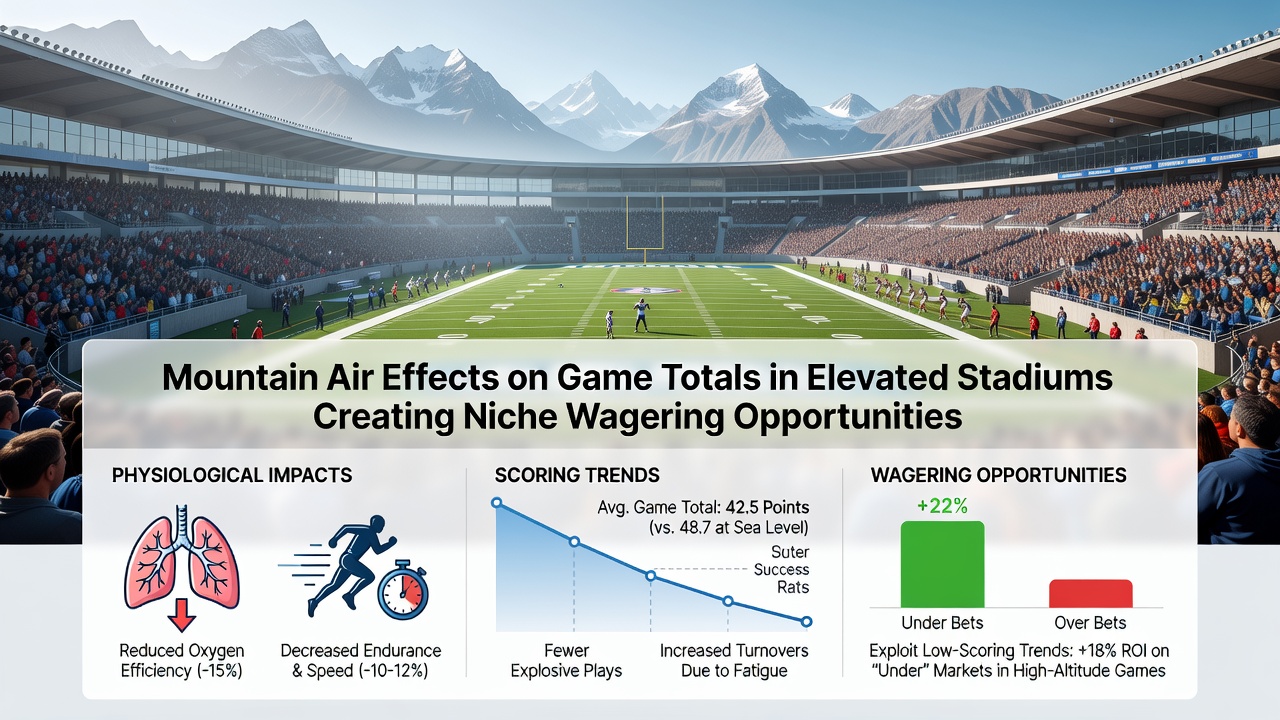
High-altitude venues change how balls travel and how athletes perform, which directly influences scoring totals in multiple sports and opens specific angles for bettors who track those patterns. Observers note that air density drops at elevations above 5,000 feet, reducing drag on projectiles while simultaneously limiting oxygen available to players during sustained effort. Data from venues such as Empower Field at Mile High and Estadio Azteca illustrate these combined effects season after season.
Physics of Thin Air on Ball Flight
Lower air pressure lets baseballs, soccer balls, and footballs maintain velocity longer because fewer molecules collide with the surface, so fly balls carry farther and shots on goal dip less. Researchers at Colorado State University documented average increases of 10 to 15 percent in batted-ball distance at 5,280 feet compared with sea-level parks, which translates into more home runs and extra-base hits during day games when temperatures rise further. In soccer, similar conditions at Mexico City’s 7,200-foot elevation allow long passes and clearances to cover greater ground, yet the same reduced oxygen supply accelerates fatigue among outfield players who cover the most ground.
Performance Data Across Seasons
League-wide statistics compiled by Major League Baseball show Coors Field consistently posts the highest run environment in the National League, with run totals averaging 1.8 runs above the league mean from 2018 through 2025. National Football League figures reveal that games at Denver produce slightly lower point totals in the second half because visiting teams record fewer successful third-down conversions after the initial quarter. FIFA match reports from CONCACAF qualifiers indicate that total goals per game at Estadio Azteca fall 0.4 goals below the tournament average when visiting sides arrive less than 48 hours before kickoff, reflecting the cumulative impact of repeated high-intensity efforts.
Betting Markets That Respond to Altitude
Oddsmakers adjust totals upward for baseball and downward for soccer and American football, yet sharp bettors identify edges when line movement lags behind actual environmental data. During August 2026, several early-season series at Coors Field and international friendlies in Mexico City will again test whether market totals fully incorporate the latest meteorological readings and travel schedules. Bettors who combine hourly humidity readings with visiting-team acclimatization timelines often locate discrepancies before lines stabilize.
Player Adaptation and Recovery Patterns
Teams that spend multiple days at altitude before competition exhibit measurable improvements in repeated sprint ability and decision-making speed. Studies published by the American College of Sports Medicine demonstrate that acclimatized athletes maintain heart rates 8 to 12 beats lower during the final 30 minutes of matches, which correlates with fewer turnovers and higher completion percentages on long-range attempts. Visiting squads arriving the same day post lower average distances covered in the second half, a factor that reduces expected goal or point output in real time.
Live Betting Adjustments During Matches
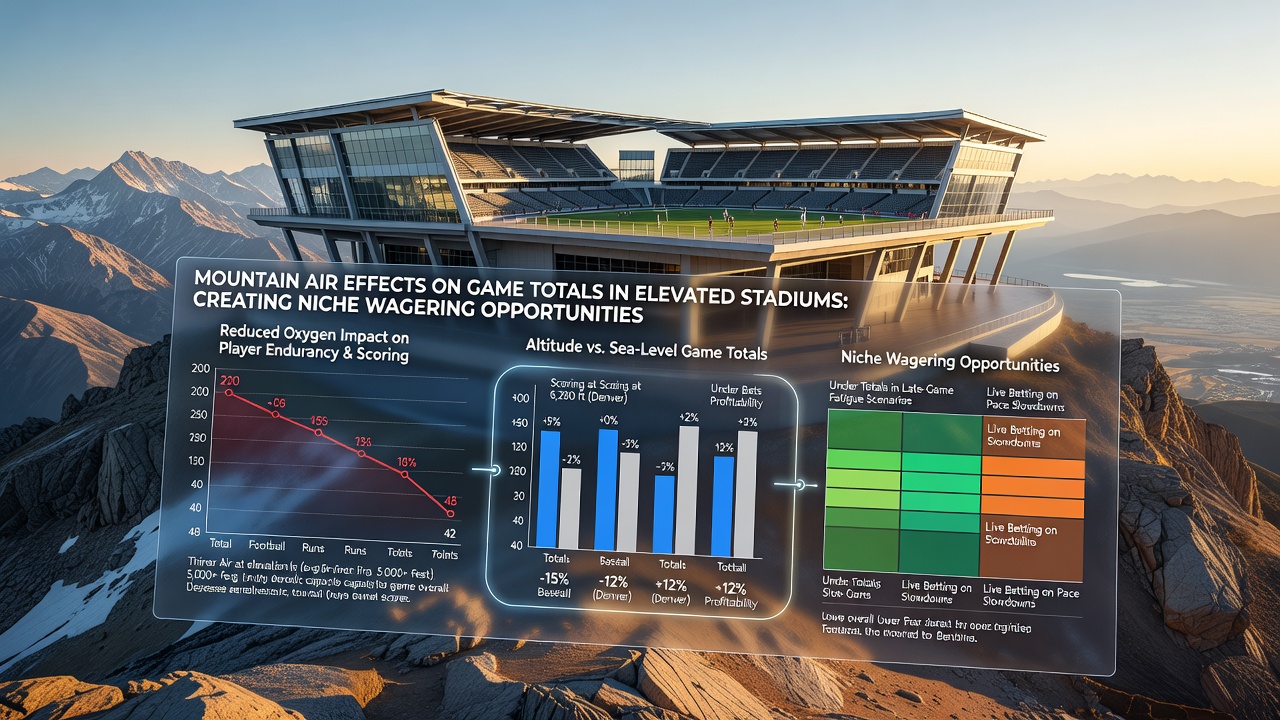
In-game markets react quickly once initial scoring reveals whether the home side or visitors have adapted to the conditions. Live totals on soccer goals and football points frequently drift lower after the 60-minute mark when oxygen debt becomes visible in reduced pressing intensity. Baseball totals move upward when wind patterns align with the typical carry at altitude, especially during evening games when humidity drops. Bettors who monitor real-time player-tracking data available through league partners can identify these shifts earlier than the general market.
Regional Examples Beyond North America
South American venues such as Estadio Hernando Siles in La Paz, Bolivia, sit above 11,900 feet and produce even more pronounced effects on total goals in CONMEBOL qualifiers. European clubs traveling to these sites for Copa Libertadores matches record sharply reduced high-intensity running distances after the first 20 minutes, according to performance reports issued by CONMEBOL’s technical department. Australian researchers studying similar conditions at Johannesburg’s 5,751-foot elevation found parallel reductions in total distance covered during rugby matches, suggesting the pattern holds across different codes when altitude exceeds 5,000 feet.
Conclusion
Stadiums located at elevation create consistent, measurable changes in game totals because thinner air simultaneously extends ball flight and restricts sustained athletic output. Those who compile environmental data, travel timelines, and historical scoring splits locate repeatable edges within totals markets that standard lines do not always capture. As schedules advance into August 2026, continued collection of these variables will keep the niche active for analysts who focus on altitude-specific performance metrics.