Referee Clock Management in La Liga Shapes Total Goals Betting Patterns
Written by Mara Schmidt · Aug 21, 2026
Referee Clock Management in La Liga Shapes Total Goals Betting Patterns
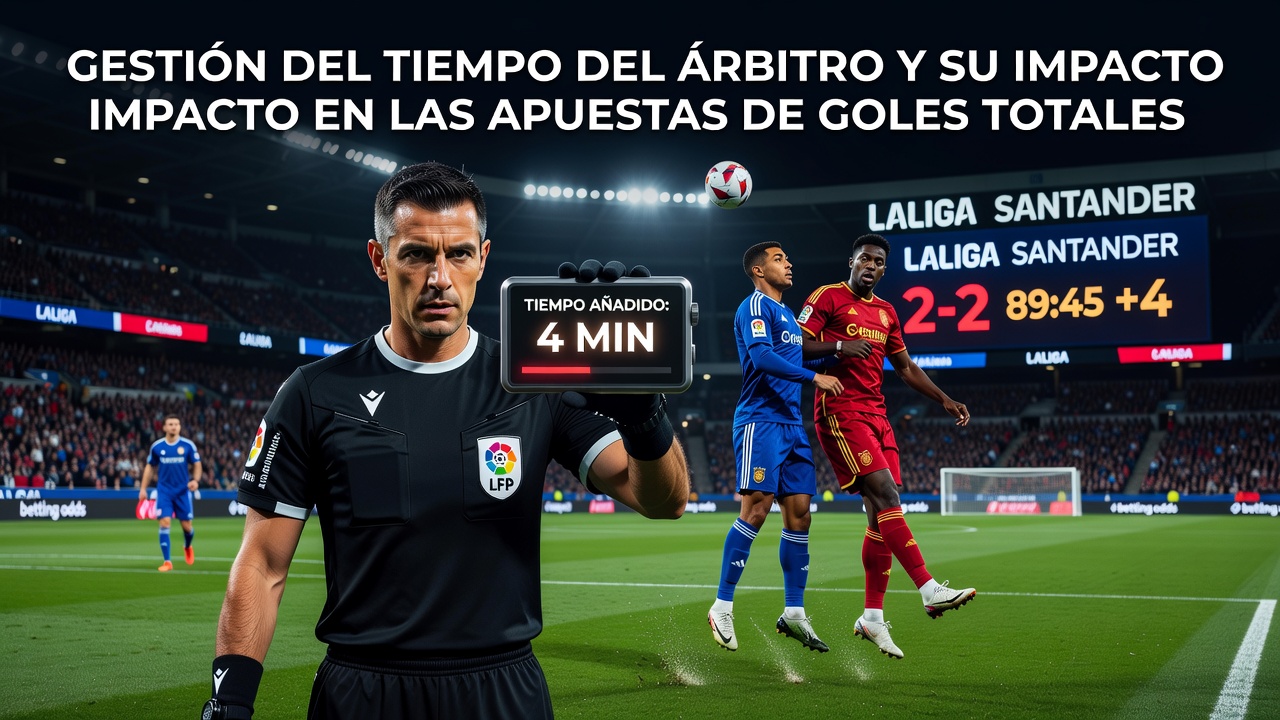
Referee clock management in Spain's top division follows structured protocols that determine added time at the end of each half, and those decisions directly influence the timing of goals in matches where totals betting lines sit close to key thresholds. Data from the 2024-25 campaign shows that average added time in the first half hovered around two minutes and forty seconds while second-half additions reached four minutes and ten seconds on average, figures that create windows for late drama when one or both sides push forward.
How Added Time Calculation Works in Practice
Officials track substitutions, injuries, goal celebrations, and time-wasting incidents before announcing the minimum added period, yet the actual duration often extends when play remains fluid or when another stoppage occurs inside the calculated window. Researchers tracking La Liga matches across multiple seasons note that referees extend second-half added time by an extra thirty to forty-five seconds in roughly one out of every three games, a pattern that lengthens the period in which a decisive goal can land and push totals over the posted line.
Seasonal Trends and Goal Distribution
Statistics compiled by independent match analysts reveal that approximately 11 percent of all La Liga goals during the 2024-25 season arrived after the ninetieth minute, with the rate climbing to 14 percent in matches that featured four or more minutes of added time. When added time exceeded five minutes, the proportion of stoppage-time goals rose further, creating measurable shifts in the final goal count that directly affect over/under outcomes. Teams trailing by one goal convert these extra minutes into higher shot volumes, while leading sides often slow the tempo, yet the net effect still produces additional goals in roughly 28 percent of extended added-time scenarios.
Betting Market Reactions and Line Movement
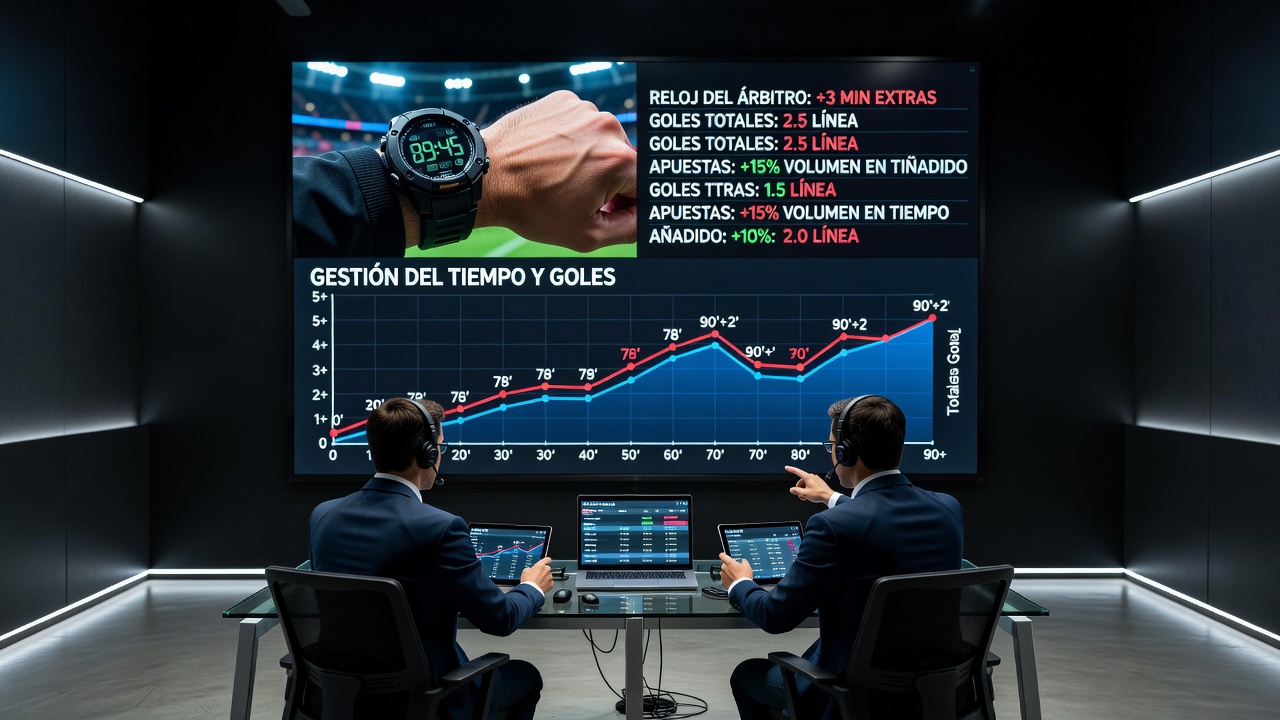
Bookmakers adjust total goals lines in real time as added time announcements appear on the fourth official's board, and sharp bettors monitor these updates because an extra minute can shift the probability of an over result by several percentage points in low-scoring contests. Historical data indicates that matches finishing with totals exactly at the line occur less frequently when added time stretches beyond five minutes, since the extended period raises the chance of at least one more scoring opportunity. Observers tracking live odds note that over positions gain value in the final ten minutes of regulation when the referee has already signaled four or more minutes of stoppage time and the score remains within one goal.
August 2026 Rule Adjustments and Early Season Data
Starting in August 2026, La Liga introduced refined guidelines requiring referees to publish a preliminary added-time estimate at the seventy-fifth minute, allowing both teams and analysts to anticipate the likely length of the closing period. Early returns from the first month of the 2026-27 season show that this transparency has increased average second-half added time by twenty-two seconds compared with the prior campaign, and the number of goals scored between the eighty-fifth and ninety-fifth minutes has risen accordingly. Those who monitor betting markets have observed tighter spreads on over/under lines in the final fifteen minutes as a direct result of the new visibility.
Case Examples from Recent Campaigns
One notable fixture from the 2025-26 season featured a referee adding five minutes and twenty seconds after multiple substitutions and a lengthy injury delay; the trailing side scored twice inside that window, flipping a 1-1 draw into a 3-1 result that crossed the 2.5-goal threshold. In another contest, a shorter added-time period of three minutes produced no further goals, leaving the total under the line despite late pressure. Patterns like these recur across the division, and match logs indicate that the correlation between extended added time and higher final totals holds across both mid-table and title-contending sides.
Practical Implications for Totals Bettors
Those analyzing La Liga totals markets incorporate referee tendencies, historical added-time averages, and current scorelines into pre-match and in-play models. When a referee demonstrates a pattern of generous second-half additions in prior fixtures, the probability weight on the over side increases, particularly in games where expected goal totals sit between 2.4 and 2.8. Conversely, officials known for strict minimum additions reduce the margin for late goals and can tilt certain matches toward the under. Tracking these variables alongside substitution patterns and fatigue indicators provides a clearer picture of how clock management intersects with final scorelines.
Conclusion
Referee clock management in Spain's top division operates as a measurable variable that alters the distribution of goals across the final minutes of matches, and this influence appears consistently in totals betting data. Updated protocols introduced for the 2026-27 season have made added-time estimates more transparent, yet the underlying relationship between extended stoppage periods and late goals remains intact. Bettors who integrate these timing factors into their analysis gain access to additional context that shapes outcomes on over and under lines throughout the campaign.