Squad Rotation Patterns During Busy Periods and Their Effect on Performance Metrics in Soccer Leagues
Written by Rafael Washington · Aug 23, 2026
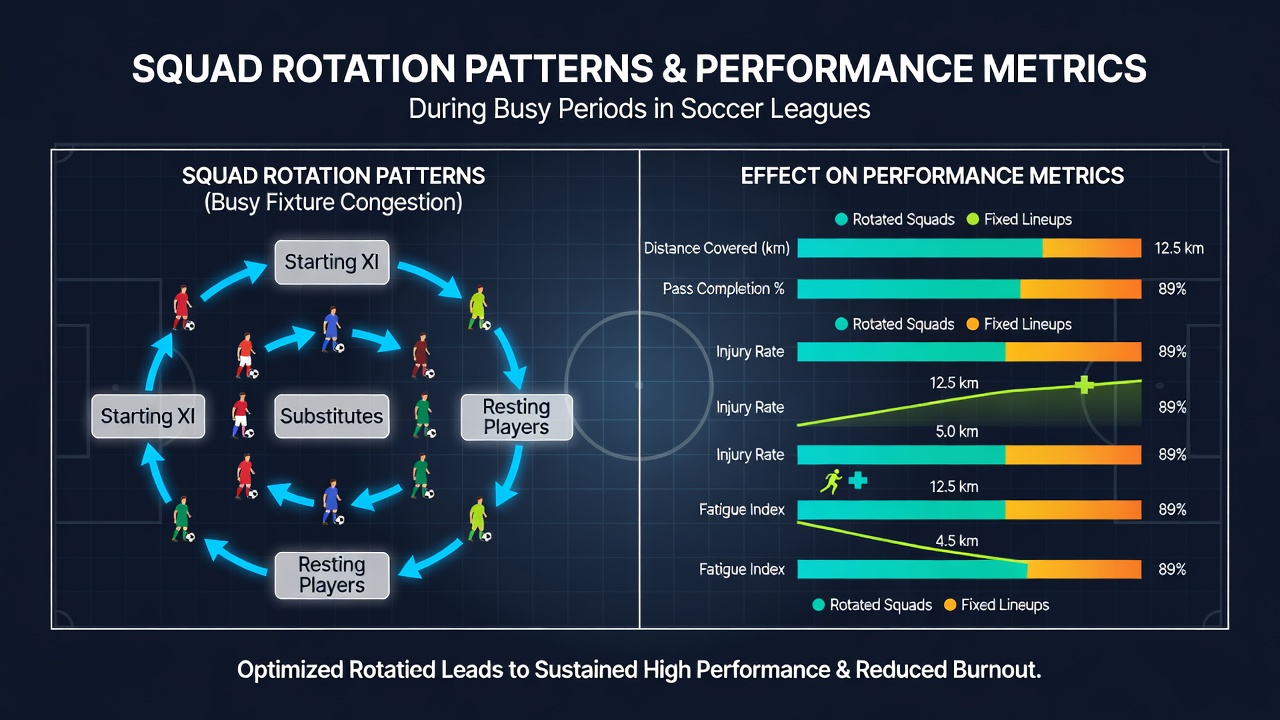
Squad Rotation Patterns During Busy Periods and Their Effect on Performance Metrics in Soccer Leagues
Busy periods in soccer leagues create demanding schedules that force managers to manage player workloads through rotation, and data from multiple competitions shows clear patterns in how these decisions influence team and individual metrics. In leagues like the Premier League and Bundesliga, fixture congestion often peaks between December and January, while August 2026 marks the start of campaigns that follow major international tournaments and require careful squad management from the outset.
Understanding Congested Fixture Schedules
European leagues typically face their most intense stretches when domestic cups overlap with league matches and European competitions, and researchers have tracked how teams distribute minutes across squads during these windows. Studies from the UEFA Elite Club Injury Study indicate that clubs participating in multiple fronts play up to 60 matches in a season, compared with 40 for those focused on domestic play alone. Rotation becomes essential when recovery time between games drops below 72 hours, and performance data reveals shifts in metrics such as distance covered, sprint frequency, and pass completion rates.
Common Rotation Approaches Across Leagues
Managers employ several patterns when balancing lineups during packed calendars, and observers note consistent strategies across top divisions. One approach involves rotating entire units rather than single players, which maintains tactical cohesion while resting key athletes, whereas another relies on tactical substitutions at fixed intervals to preserve freshness. Data from the 2025-2026 Bundesliga season showed teams that rotated at least three outfield players between midweek and weekend fixtures recorded higher average possession retention in the second half of matches. In contrast, squads that made minimal changes experienced measurable drops in high-intensity running output after the 60-minute mark.
Effects on Key Performance Indicators
Performance metrics respond directly to rotation frequency, and figures compiled by league analysts demonstrate specific trends. Teams that rotated defenders more aggressively during congested periods maintained lower goals conceded per 90 minutes, while attacking rotations correlated with sustained shot creation rates. Research published by the FIFA Training Centre found that players who accumulated fewer than 300 minutes over a three-week congested block showed improved pass accuracy upon return to regular rotation, whereas those exceeding 450 minutes displayed declines in both dribble success and key pass creation. Injury incidence also rises when rotation is insufficient, with hamstring and adductor issues appearing more frequently in squads logging high match loads without adequate rest.
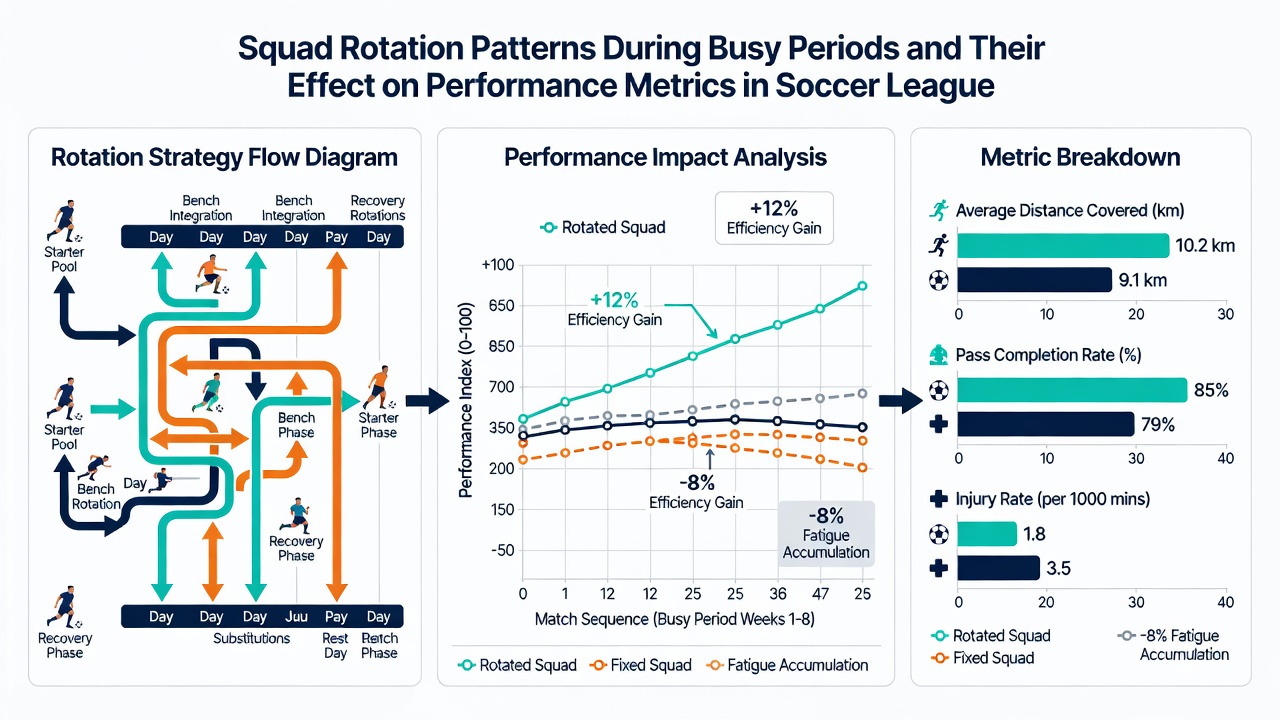
League-Specific Patterns and Data Trends
Different competitions produce distinct rotation behaviors because of varying match densities and squad sizes. Premier League clubs often rotate more aggressively in December because of the traditional festive fixture list, and tracking data shows that sides averaging 2.5 player changes per game during this period sustained higher points-per-game averages than those relying on consistent starting elevens. Serie A teams, facing fewer midweek European commitments in some seasons, tend toward smaller rotations focused on midfielders, and metrics indicate this preserves defensive structure while occasionally reducing attacking output. In August 2026, post-international tournament squads across multiple leagues entered the new campaign with pre-planned rotation schedules designed to manage players returning from summer duty, and early season statistics already reflect lower injury rates among teams that limited minutes for returning internationals in the opening weeks.
Recovery and Workload Monitoring Tools
Modern monitoring systems allow clubs to quantify the impact of rotation decisions in real time, and GPS and heart-rate data provide objective measures that guide lineup choices. Clubs integrate these tools to track individual player loads, and evidence shows that maintaining a squad depth threshold of at least 18 players capable of starting matches correlates with stable performance metrics throughout congested periods. When teams fall below this depth, metrics such as expected goals and expected points begin to decline after the fourth consecutive match in a 14-day window.
Conclusion
Squad rotation during busy periods produces measurable effects on performance metrics across soccer leagues, and data consistently links strategic player management to sustained output in areas such as goal difference, pass completion, and injury prevention. As schedules continue to evolve, tracking these patterns provides clear evidence of how rotation frequency and selection influence results over the course of a season.