Stadium Elevation Effects on Endurance Metrics and Scoring Distributions in High-Altitude Soccer Fixtures
Written by Ulrich Baumann · Aug 7, 2026
Stadium Elevation Effects on Endurance Metrics and Scoring Distributions in High-Altitude Soccer Fixtures
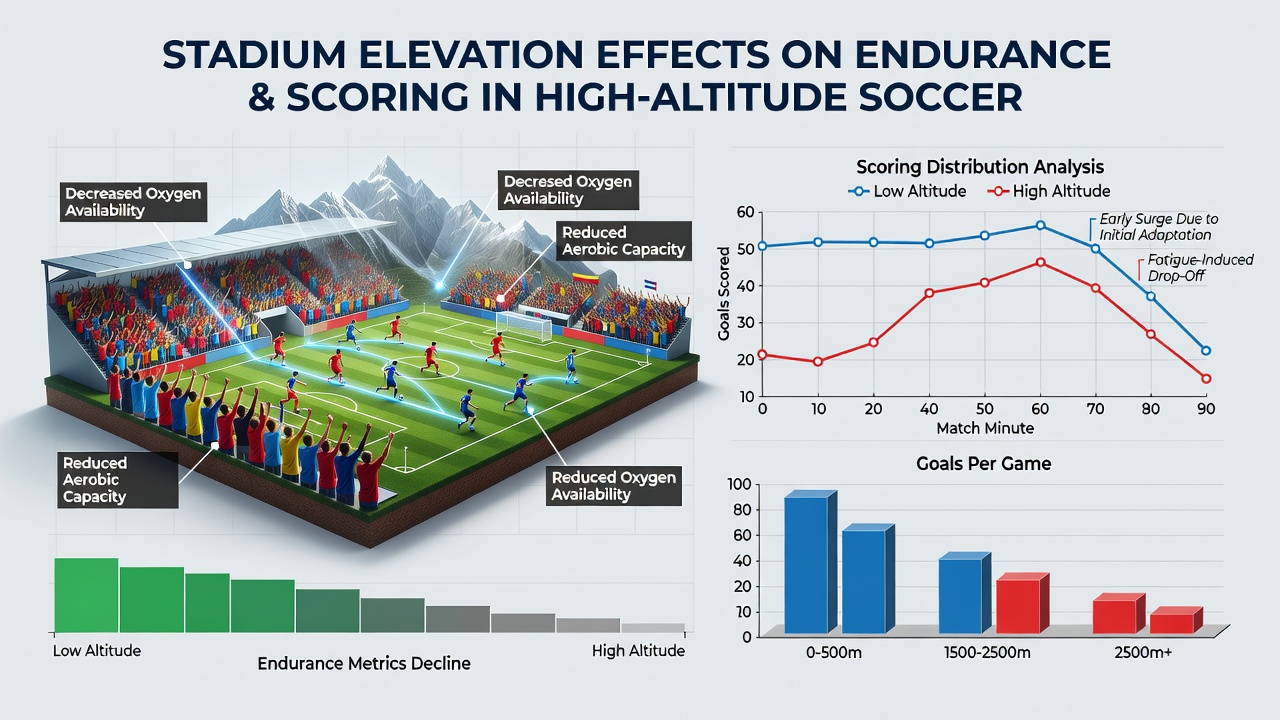
High-altitude venues create distinct physiological demands that alter player endurance and reshape how goals appear across match timelines, with data from South American and European fixtures showing measurable shifts in distance covered and heart-rate responses. Researchers at institutions across multiple continents have tracked these patterns through GPS and wearable sensors, revealing that oxygen availability drops sharply above 2000 meters and forces adaptations in pacing strategies within the first 15 minutes of play.
Physiological Responses at Elevation
Players experience reduced oxygen saturation that elevates heart rates by 10 to 15 beats per minute compared with sea-level conditions, according to studies conducted by the Australian Institute of Sport. This increase occurs because the body compensates for lower partial pressure of oxygen, which in turn accelerates fatigue in repeated high-intensity efforts such as sprints and recoveries. Teams acclimatized to altitudes above 2500 meters maintain higher total distances covered in the second half, whereas visiting sides from lower elevations often see a 5 to 8 percent decline in high-speed running after the 60-minute mark.
Stadiums like Estadio Hernando Siles in La Paz sit at roughly 3600 meters, where these effects compound; data collected during Bolivian league matches in 2025 indicate that visiting players record elevated lactate thresholds earlier in games. Similar patterns appear in Mexico City at 2240 meters, where CONCACAF competition records show visiting midfielders covering 400 to 600 fewer meters at intensities above 20 km/h.
Impact on Match Scoring Patterns
Scoring distributions shift noticeably because endurance limitations reduce pressing intensity and transition speed after the opening 30 minutes. Home sides at high altitude record a higher proportion of goals between minutes 31 and 60, while away teams score a larger share in the final 15 minutes when the home side’s defensive lines begin to drop. Figures from FIFA World Cup qualifiers between 2018 and 2025 reveal that matches played above 2500 meters produce an average of 2.4 goals per game versus 2.8 at lower elevations, with the difference driven primarily by fewer away goals in the opening half.
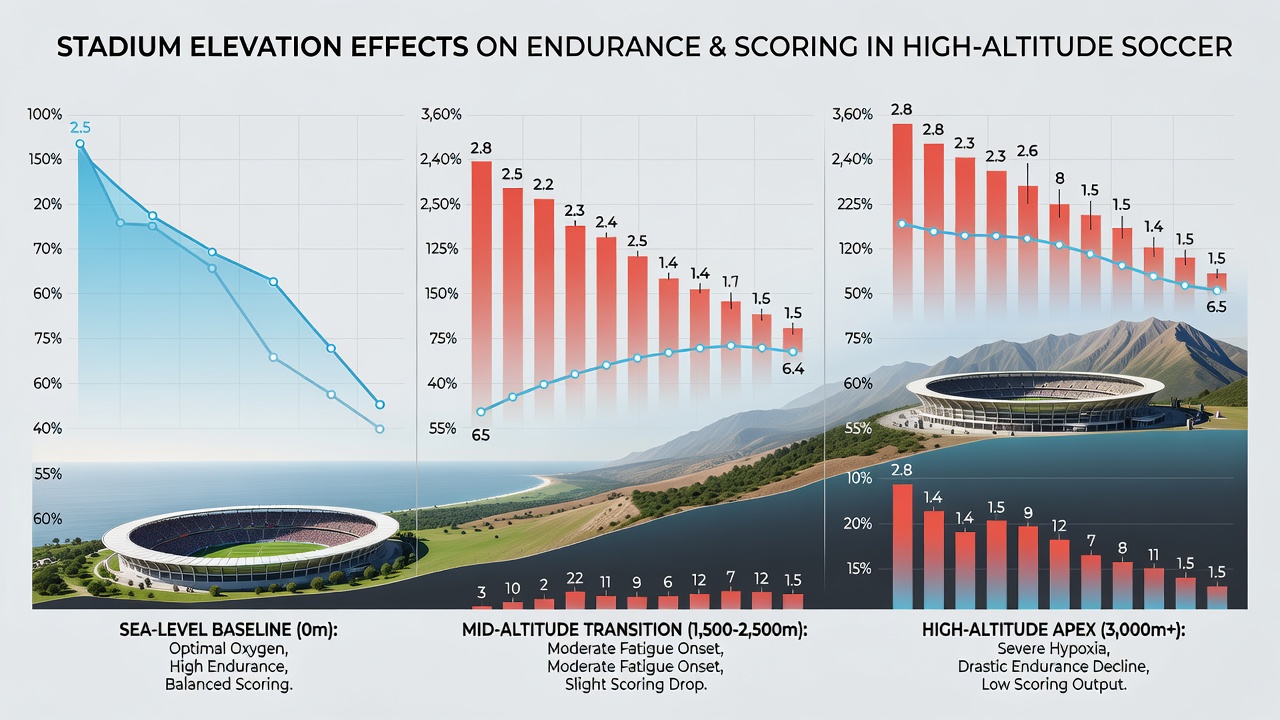
One study from the University of Cape Town examined 120 matches across Andean venues and found that the probability of a goal in the 46th to 75th minute window rises by approximately 12 percent when the away team arrives within 48 hours of kickoff. The same dataset shows that teams given five or more days of acclimatization reduce this disparity, producing scoring timelines closer to sea-level norms. August 2026 qualifiers scheduled in Quito and La Paz will provide fresh data points for these models, as several European-based squads prepare adjusted training regimens ahead of those fixtures.
Endurance Metrics Across Competition Levels
National federations and academic groups have compiled comparative datasets that separate domestic from international fixtures. In domestic leagues where both sides share partial acclimatization, total sprint counts remain stable throughout 90 minutes, yet visiting teams still exhibit 3 to 5 percent lower average speeds in the final third. International matches widen these gaps because visiting players rarely train above 2000 meters for extended periods. Canadian Sport Institute researchers noted in a 2024 report that players from northern latitudes required at least 10 days of altitude exposure before high-speed running volumes approached those recorded at home venues.
Stadium-specific factors such as pitch dimensions and prevailing winds interact with elevation to influence ball trajectory and recovery time between bursts. Observers tracking matches at Cuzco’s 3400-meter stadium recorded slightly longer average possession sequences for home sides, attributed to opponents’ quicker onset of fatigue rather than tactical superiority alone.
Conclusion
Available evidence from multiple research centers demonstrates that elevation above 2000 meters produces consistent changes in endurance metrics and goal timing, with the magnitude of those changes scaling according to acclimatization windows and competition level. As August 2026 approaches and additional high-altitude fixtures enter calendars, ongoing sensor data collection will continue to refine models that quantify these physiological and statistical effects across global soccer.